
Ask any business owner how they know their business is doing well and they'll almost always answer with one, two, at most three indicators. “As long as I don't have overdue receivables.” “As long as sales go up month after month.” “As long as there's cash flow.” They're good signs, but they're not a diagnosis. It's like looking at the altimeter and thinking you already know the mountain: it tells you how high you are, but not whether you have the gear, the supplies and the rope team to keep climbing.
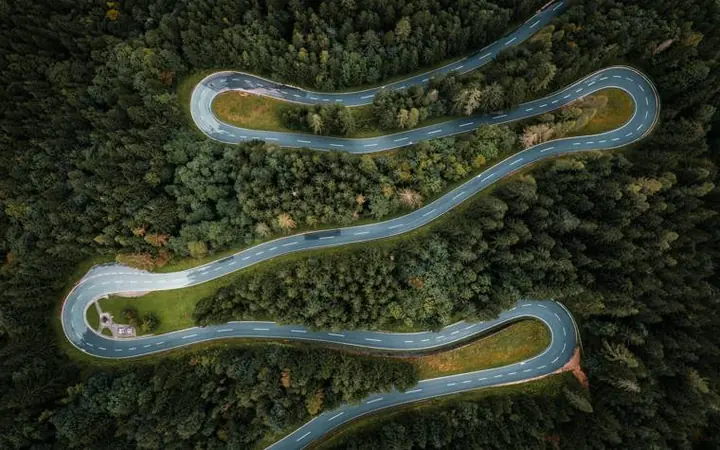
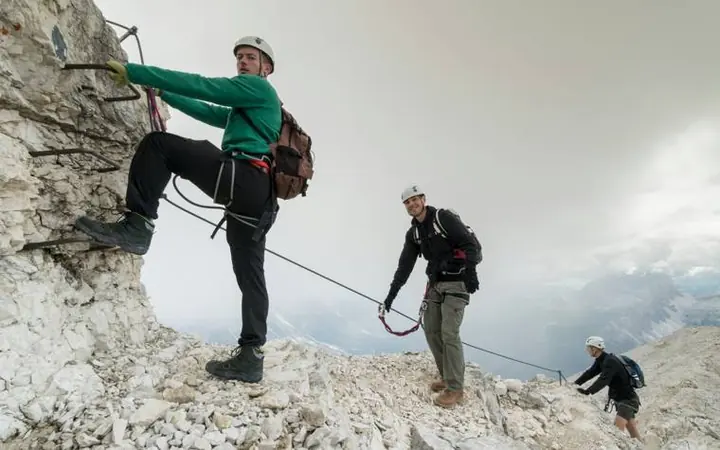
At KLIMMER we see every company as an expedition. It has a summit it wants to reach (its purpose), a route (its strategy), supplies consumed on every stretch (its cash), a rope team — the group of climbers tied to the same rope who move forward together or not at all (its team) — and a map everyone should be able to read (its information). No serious climber starts up without first checking where they stand and what they have.
It all starts with awareness
There's no way to change what you can't see. It seems obvious, but it's the step most companies skip. In our experience there are two kinds of business owners who seek help:
- The one who already feels the blow. They had a bad quarter, they struggle to make payroll or sales have stalled. The problem is evident, although they often don't know where it comes from. Sometimes they arrive when the situation is already serious.
- The one who decides to build structure before it hits. Their business is doing well, but they understand that the way it operates today won't support the size they want to have tomorrow.
The second needs much more awareness than the first, because nothing forces them to move. And it's exactly the kind of company we enjoy working with most: it climbs with the route mapped, not in rescue mode.
The first step of any climb isn't taking a step: it's finding yourself on the map.
That awareness requires being brutally honest about how the business operates. And it requires looking outward: artificial intelligence, automation and integrated systems are no longer exclusive to large corporations. If you don't see your areas of opportunity, sooner or later a competitor will come along who does.

The five checkpoints
Before every important stretch, an expedition checks the same things: direction, altitude, supplies, rope team and autonomy. In a company, those five points translate like this. None is enough on its own; together they tell you whether you're ready for the next stretch.
1. Direction: a summit worth climbing
A company without purpose stops sooner or later. We're not talking about a phrase on the wall, but about people coming to work knowing why what they do matters, and about the business making a real difference in its market. Without a clear summit, everyone climbs wherever they think best.
2. Altitude you can sustain
Gaining height fast is useless if each step costs you more than you advance. At an early stage it's valid to sacrifice margin to win market share. But a mature company that wants to last has to grow with profitability. Selling more every year and earning less every year has a name: business ego. It's climbing in a hurry and running out of strength halfway up the wall.
3. Supplies for every stretch
Here's one of the least intuitive rules: growth consumes cash. The higher you climb, the more supplies you need: more inventory, more receivables, more working capital. If you don't adjust your days of inventory, collections and supplier payments, you can run out of reserves halfway up even while selling like never before.
4. A rope team that moves together
On a rope team (the group of climbers tied to the same rope), if one pulls in another direction, everyone stops. If every time the company grows there are more administrative problems, more rework and more conflicts between areas that don't talk to each other, growth is being paid for with wear and tear. That drama is measurable, and it's reduced with clear processes, shared information and well-defined roles.
5. The base camp test
The most revealing point: could the expedition keep moving forward if the owner or director stayed at base camp (the starting point, where the expedition organizes itself and from which the climb is coordinated) for a month, three months, even a year? It's not about leaving, but about asking the question. Answering it honestly immediately reveals where the leaks, the dependencies and the processes that live in one person's head are.

Check your gear in five minutes
- Can you explain in one sentence why your company exists? Would your team say the same?
- Do you know your real margin by customer, product or branch today, without waiting for the month-end close?
- If tomorrow you sold 30 % more, where would the cash to sustain that growth come from?
- How many problems last month were born between two areas that didn't communicate?
- If you were away for four weeks, what would stop?
If two or more questions made you uncomfortable, it's not bad news: it's information. And information is the starting point of any climb.
The KLIMMER view
That's why at KLIMMER we don't start by selling software. We start with a diagnostic: reviewing the five checkpoints, locating the leaks and mapping the route to your next level. First the processes, then the technology that supports them and, on top, the artificial intelligence that boosts them. In that order.
You're the one who climbs. Our job is to help you read the map before you go up.