

It was seven o'clock on a Thursday evening when Ernesto, director of an industrial machine shop in northern Mexico, read the email he had been dreading for weeks: “Thank you for your interest. We have already awarded the project to another supplier.”
It wasn't the first time. His engineering team took two to four days to quote each technical drawing that arrived as a PDF. By the time the proposal went out, the customer had already decided. They weren't losing on price or quality; they were losing on time.
Ernesto had done what any responsible business owner would do: he invested in an ERP, hired more people and asked for overtime. Nothing changed the outcome. That night, in the shop's empty parking lot, he asked himself the question many leaders ask in silence: what if the problem is that I no longer know how to grow this?
Story based on a real KLIMMER case; the name was changed and the data anonymized for confidentiality.
Everyone uses AI. Very few win with it.
If you run a company of 20 to 200 people, you surely feel the pressure: everyone is talking about artificial intelligence and it seems that if you don't get on board today, you'll fall behind. The most recent data shows a more nuanced reality:
- Almost 9 in 10 organizations already use AI regularly in at least one area of the business, but only 37% can attribute any impact on operating profit to it (McKinsey & Company, 2026).
- 60 % of companies get minimal or no gains from their AI investment, while 5 % achieve twice the revenue growth and 40% more cost reduction than the rest (Boston Consulting Group [BCG], 2025).
- In Mexico, only 7% of organizations have secured a return on their AI investment, and half have had to rethink their initiatives because costs exceeded the expected benefits (KPMG Mexico, 2026).
- And the coming wave, AI agents, carries the same warning: more than 40% of those projects will be canceled before the end of 2027 due to rising costs or unclear business value (Gartner, 2025).
The opportunity is real. Generative AI and other technologies could already automate activities that today absorb 60–70% of the time of employees (Chui et al., 2023). But the gap between using AI and winning with it keeps getting wider.
The difference isn't the tool
What sets apart that small group that does get results? McKinsey found it clearly: almost 3 in 4 AI high performers redesigned their workflows, versus only 1 in 4 of the rest (McKinsey & Company, 2026). They didn't put AI on top of what they already did; first they rethought how to work.
BCG sums it up in a rule worth keeping in mind: companies that capture value devote 10% of their effort to algorithms, 20% to technology and data, and 70% to people and processes (de Bellefonds et al., 2024).
Automating a messy process doesn't organize it; it makes it fail faster.
Seven out of ten parts of success have nothing to do with the tool. They have to do with understanding how your operation really works: who decides, with what information, where things get stuck and what judgment lives only in one person's head.
On a mountain expedition, nobody chooses the gear before knowing the route. First you study the terrain, mark the checkpoints and decide how to climb. The gear is chosen afterward, based on the route. The same is true of AI.

How to make it happen in the short term
You don't need a two-year project or a corporate budget. BCG found that 70% of AI's potential value lies in the core functions of the business: sales, operations, manufacturing, supply chain and pricing (BCG, 2025). Exactly where a growing company feels the weight of the day-to-day most. With a well-mapped route, results show in weeks.
A route in four stretches
- Find yourself on the map (weeks 1 and 2). Interview the 3 to 5 people who know the operation best and map, as it happens today, the 2 or 3 processes that consume the most time or money.
- Choose the right route (week 3). Prioritize by impact and effort. The best first case is repetitive, consumes many hours, has data available and, if solved, shows in the business.
- Climb a first stretch (weeks 4 to 8). Implement a pilot on a real process, not a generic demo. Measure from day one: time, volume, errors and cost.
- Consolidate and keep scaling (from month 3). With measurable results in hand, decide with data which process to improve next.
What happened with Ernesto
Before talking about artificial intelligence, the first thing was to understand how quoting was really done in the shop: what the engineer checked on each drawing, how he calculated operations and times, and where he got the costs from.
With that process clear, we implemented an AI agent that reads the technical drawings directly, calculates the required operations and machining times, and automatically generates the bill of materials and costs inside his ERP. The engineer no longer enters data: he reviews and validates the proposal in minutes.
- 85 % less time preparing technical quotes.
- 3 times more projects quoted per month, with the same engineering team.
- Formal proposals delivered the same day and precise calculations that protect the margin.
But the biggest change doesn't show up in any indicator. Ernesto stopped feeling that growth was slipping through his fingers. His team stopped living in urgency. And the conversation in leadership went from “how do we survive this month?” a “what's the next stretch?”.
KLIMMER case with anonymized data; results vary with each operation.
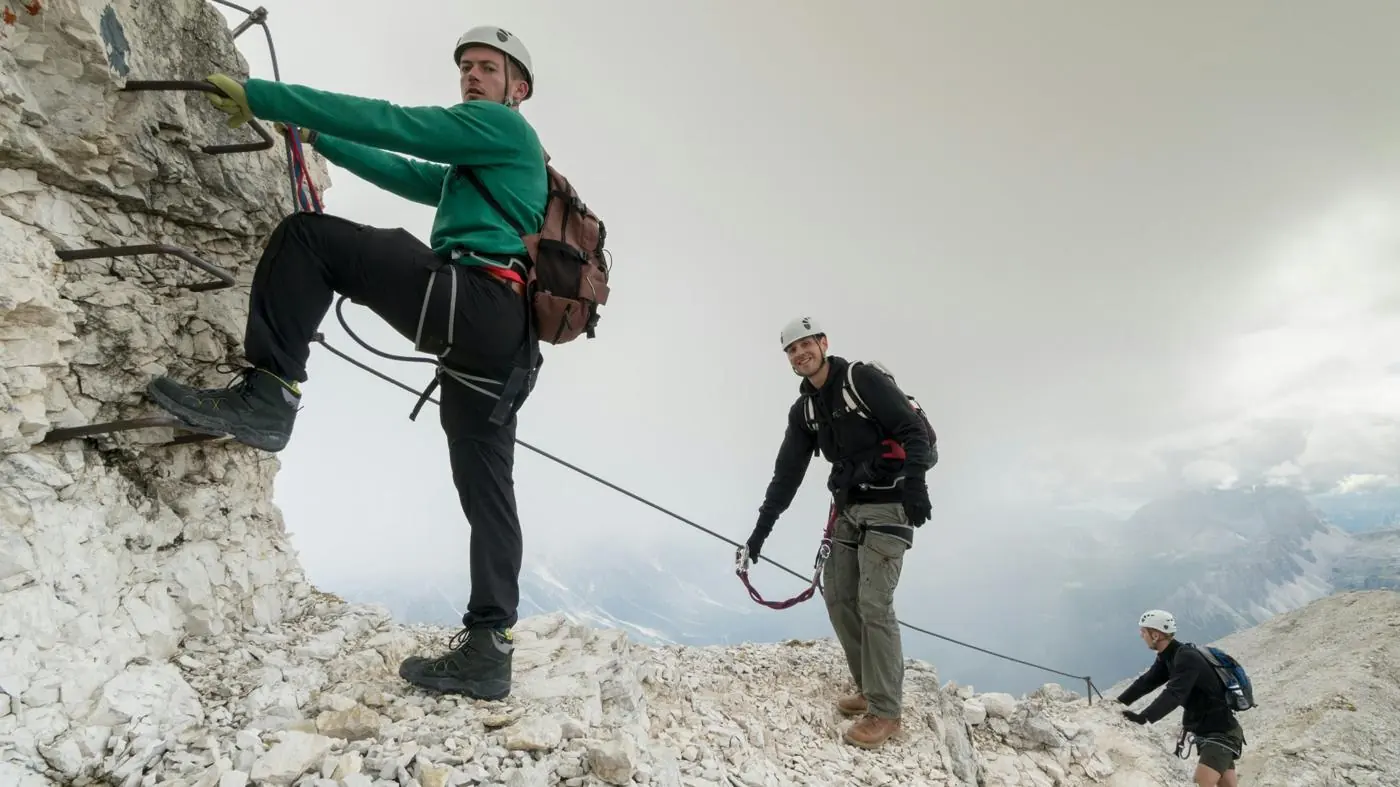
You don't have to climb alone
If, while reading, you thought of your own company — that process that depends on a single person, those hours lost entering the same thing twice, those opportunities that slip away because you didn't respond in time — that thought is the first step.
Artificial intelligence isn't going to decide where your company goes. That's up to you. What it can do, if applied well, is take weight off your team so they have the energy to climb.
At KLIMMER we do exactly that: first we understand your operation and then we propose. We diagnose before we prescribe, prioritize what really moves your business and stay with you until you see results. No vendor commissions, and talking directly with the person who signs the work.
Klimmer means “climber”. You're the one who climbs. We help you map the route.
References
Boston Consulting Group. (2025, September 30). The widening AI value gap: Build for the future 2025. https://media-publications.bcg.com/The-Widening-AI-Value-Gap-Sept-2025.pdf
Chui, M., Hazan, E., Roberts, R., Singla, A., Smaje, K., Sukharevsky, A., Yee, L. and Zemmel, R. (2023). The economic potential of generative AI: The next productivity frontier. McKinsey & Company.
de Bellefonds, N., Charanya, T., Franke, M. R., Apotheker, J., Forth, P., Grebe, M., Luther, A., de Laubier, R., Lukic, V., Martin, M., Nopp, C. and Sassine, J. (2024). Where's the value in AI? Boston Consulting Group. https://web-assets.bcg.com/a5/37/be4ddf26420e95aa7107a35aae8d/bcg-wheres-the-value-in-ai.pdf
Gartner. (2025, June 25). Gartner predicts over 40% of agentic AI projects will be canceled by end of 2027 [Press release]. https://www.gartner.com/en/newsroom/press-releases/2025-06-25-gartner-predicts-over-40-percent-of-agentic-ai-projects-will-be-canceled-by-end-of-2027
KPMG Mexico. (2026, July 28). Las empresas en México aceleran el uso de IA, pero enfrentan dificultades para demostrar el retorno de la inversión [Press release, Global AI Pulse Q2 2026]. https://kpmg.com/mx/es/sala-de-prensa/comunicados-de-prensa/2026/07/cp-las-empresas-en-mexico-aceleran-el-uso-de-ia-pero-enfrentan-dificultades-para-demostrar-el-retorno-de-la-inversion.html
McKinsey & Company. (2026, August 25). The state of AI in 2026: On the road to ROI (D. Tinkoff, L. Van der Veken, M. Chui and T. Balakrishnan). https://www.mckinsey.com/capabilities/quantumblack/our-insights/the-state-of-ai